
Practical Illustrations – Examples
A Real Estate Development company advertises for a job position – Director, Sales and Marketing.
This organisation is typically seeking someone with a proven track record of success in the professional disciple – sales and marketing, grounded in real estate industry knowledge and experience and strategic leadership.
Recruiting into such positions will require assessing the candidates by the following performance measurement criteria:
- values they can create;
- problem they can solve;
- impact they can make;
- continued relevance and effective throughout their career journey in the organisation.
Consider the career journey of two candidates who applied for the same advertised position, Director, Sales and Marketing, Real Estate and Property Development.
Both candidates studied Accounting at the same university and obtained professional accounting certifications while still undergraduates. They also graduated on the same day, age 20 years and commenced their first employment with the same organisation—a real estate and property development firm—as Accounts Payable Officers within the Finance and Accounts Department.
The organisation operates a structured and deliberate job rotation programme across all staff levels as part of its talent development and business continuity strategy. This approach is designed to expose employees to different functions and departments, broaden their understanding of organisational operations, strengthen collaboration, and reduce key-person dependency risk.
Candidate 1
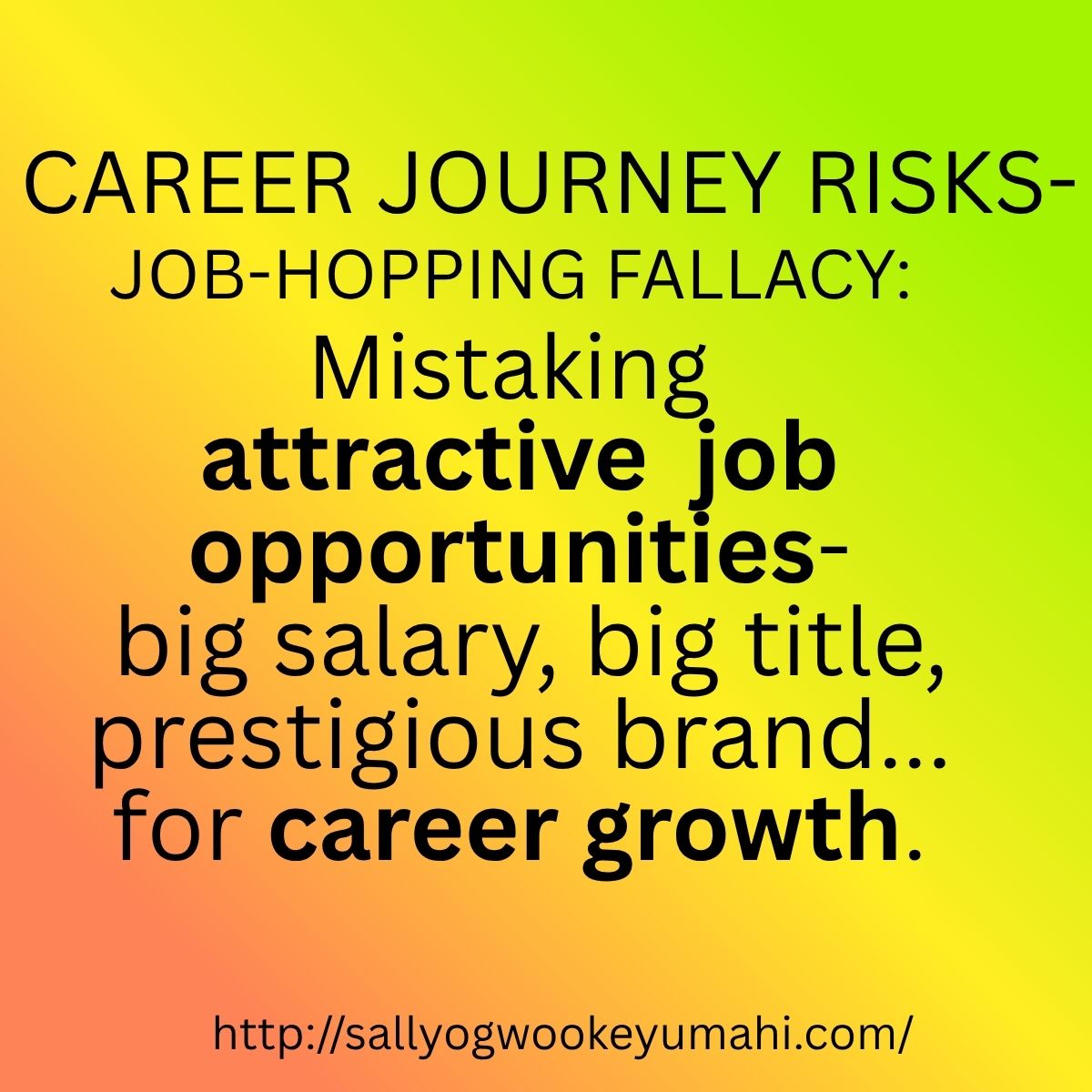
Candidate 1 believes that frequent job hopping driven by higher pay, attractive job titles, prestigious certifications, and well-known company brands is the fastest route to career growth. Consequently, the career decisions are largely influenced by immediate opportunities rather than a deliberate long-term development strategy, and has not established a clear pathway for industry specialisation, mastery of a particular discipline, or how to remain professionally relevant and economically productive after retirement from active employment.
Over a 10-year period, the experience is spread across multiple roles and organisations:
- First 3 years: Accounts Payable Officer
- Next 2 years: HR and Administration Manager (moved for higher pay) in FMCG.
- Following 2 years: Senior Manager, Procurement and Logistics, Transportation business (attracted by title and compensation)
- Next 1 year: Senior Business Development Manager, Oil & Gas downstream (motivated by salary package)
- Most recent role: Senor Associate – Tax in a global audit and consulting firm (driven by brand prestige)
- All roles, dates, and transitions are clearly documented in the resume and CV.
Candidate 2
Candidate 2 believes that sustainable and long-term career success is best achieved through a deliberate and structured career pathway. From the outset, the candidate established a clear career vision – to become the Director of Sales and Marketing in the real estate and property development industry within 15 years of graduation, and subsequently leverage the accumulated knowledge, experience, professional network, and industry expertise to establish and manage a successful real estate business upon retirement at age 60.
To support this long-term aspiration, Candidate 2 conducted extensive research to identify the core competencies, knowledge areas, skills, and experiences required for effective strategic Sales and Marketing leadership within the real estate sector. The findings highlighted the following critical competencies:
- Customer acquisition and retention
- Stakeholder and customer relationship management
- Market research and competitive analysis
- Product positioning and brand management
- Advertising, communications, and public relations
- Digital marketing and customer engagement
- Revenue generation and sales performance management
- Strategic business growth and market expansion
Candidate 2 subsequently made deliberate and sustained investments in personal and professional development through postgraduate education, business school programmes, industry conferences, business and social networking events, self-directed learning, mentorship, and coaching. In addition, the candidate actively volunteered as a facilitator for internal and external Sales and Marketing training programmes and participated in community development and advocacy initiatives to strengthen leadership, stakeholder engagement, communication, and relationship-management capabilities.
The career path includes:
- First 6 years: Structured rotations within Finance and Accounts in the current organisation.
- From Year 7: Transition into Sales and Marketing functions in the current organisation.
- Long-term plan: Minimum of 12 years progressive experience in Sales and Marketing roles (either within the organisation or in a comparable firm if mobility becomes necessary)
- Integration of career goals into performance appraisal and development plans
- Consistent, deliberate execution of a documented career development roadmap
- All progression milestones and timelines are clearly documented in the CV.
The Key Question
Which of the two candidates is better prepared for the job and more importantly, for long-term value creation within an organisation?
The illustrations above do not diminish the value of being versatile or having broad business exposure and wider perspective developed through involvement in cross-functional operations. However, Executive director and C-suite positions frequently require deep functional expertise within a specific discipline and industry. These cannot be developed through short-term career development plans driven solely by the pursuit of higher salaries, prestigious titles, rapid promotions, or employment with well-known brands. Only a structure deliberate career progression strategy can help.
Conclusion
Indiscriminate job-hopping is a significant career-positioning risk. In contrast, deliberate career positioning, supported by a well-structured development strategy and disciplined execution, is a powerful career-growth enabler. Sustainable career growth requires deliberate planning, continuous learning, competence development, strategic decision-making, and the practical application of acquired knowledge, skills and experiences to solving complex, multidimensional real-life problems
Professionals should focus on building deep expertise within a chosen profession, discipline, or industry early in their career journey while maintaining a broad understanding of related functions and emerging trends. Career success is rarely determined by the number of jobs held; it is more often determined by the depth of competence developed, the value created, and the reputation built over time.
The earlier individuals begin to understand this reality, the better positioned they will be to make informed career decisions and achieve sustainable professional success. proposition
As I often say: “Indiscriminate job-hopping is a significant career-positioning risk, while deliberate, well-structured career positioning, supported by disciplined execution, serves as an effective control.” — Sally Ogwo’Okey-Umahi
The best time to begin intentional career positioning is during one’s formative years. The second-best time is today.
When individuals develop greater career awareness and strategic thinking early in their career journey. they are better equipped to make informed decisions that support long-term professional growth, sustained employability, and career success. It enables them to develop the confidence, capabilities, and entrepreneurial mindset needed to create opportunities for themselves when the job market no longer aligns with their aspirations, experience, or value
What do you think – Have you encountered career journey misconceptions in your own experience either personally or as a hiring manager, mentor, recruiter, executive, or business leader?
I look forward to hearing your perspectives and experiences.
Read more @https://sallyowgookeyumahi.com//
