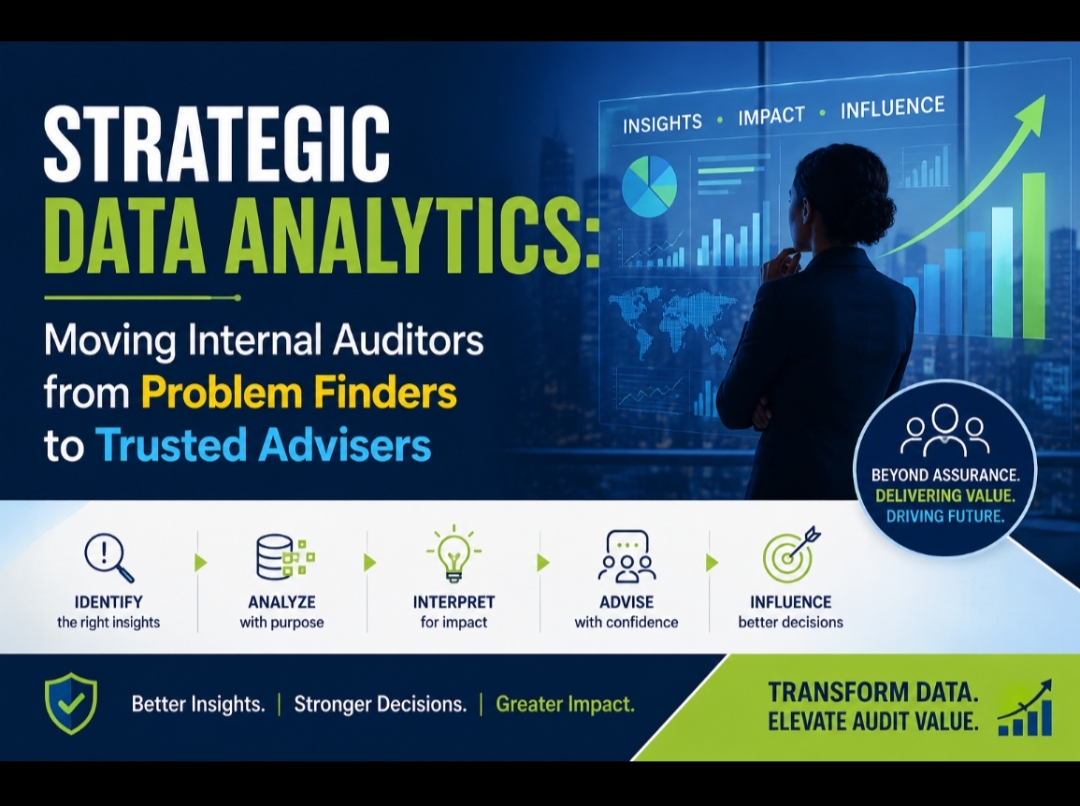

The Strategic Data Analytics Equation
Bridging this gap requires a change in mindset from investigative to research oriented, adopting strategic thinking & systematic approach to embedding the elements of the strategic data analytics equation:
Strategic Data Analytics = Business Analytics Model + Computational Method + Data Analytics Software + Intelligent Interpretation
1. Business Analytics Model – Defines What to Analyse
Effective analytics begins with understanding the business—not the data analytics software package.
This involves identifying and understanding:
- Strategic objectives
- Business processes
- Enterprise risks
- Internal controls
- Key Performance Indicators (KPIs)
- Key Risk Objectives (KROs) and Key Risk Indicators (KRIs)
- Key Control Objectives (KCOs) and Key Control Indicators (KCIs)
The Business Analytics Model establishes the business context and determines what should be analysed, why it matters, and how the insights will support organizational objectives.
2. Computational Method – Determines How to Analyse
The Computational Method identifies the most appropriate mathematical, statistical, scientific, artificial intelligence, or machine learning techniques required to transform raw data into meaningful, reliable, and actionable business insights.
It answers a fundamental question:
Which analytical methods will generate the most reliable evidence to support informed strategic decisions?
3. Data Analytics Software – Executes the Analysis
Technology automates the analytical process by applying the Business Analytics Model and Computational Method while enabling efficient analysis, visualization, and communication of results.
Examples of general-purpose analytics tools include:
- Microsoft Excel
- Power BI
- SQL
- Python
- R
- Tableau
Examples of specialized audit analytics platforms include:
- SAS Audit Management
- Diligent HighBond (formerly Galvanize)
- Wolters Kluwer TeamMate Analytics
- CaseWare IDEA
Software is an enabler—not the strategy. Its role is to execute analytical models efficiently; it cannot replace business understanding, critical thinking, or professional judgment.
4. Intelligent Interpretation – Transforms Analytics into Strategic Intelligence
The greatest value of data analytics lies not in producing charts and dashboards but in interpreting analytical results within the organization’s strategic context.
Intelligent interpretation enables assurance professionals to explain:
- What happened.
- When it happened.
- How it happened.
- Who caused or influenced the outcome.
- Why it happened.
- What is likely to happen next.
- Emerging trends, risks, and future scenarios.
- The implications for current and future strategic objectives.
- The actions Management, the Board, and other stakeholders should take.
This is where data becomes information, information becomes intelligence, intelligence becomes insight, and insight drives strategic action.
