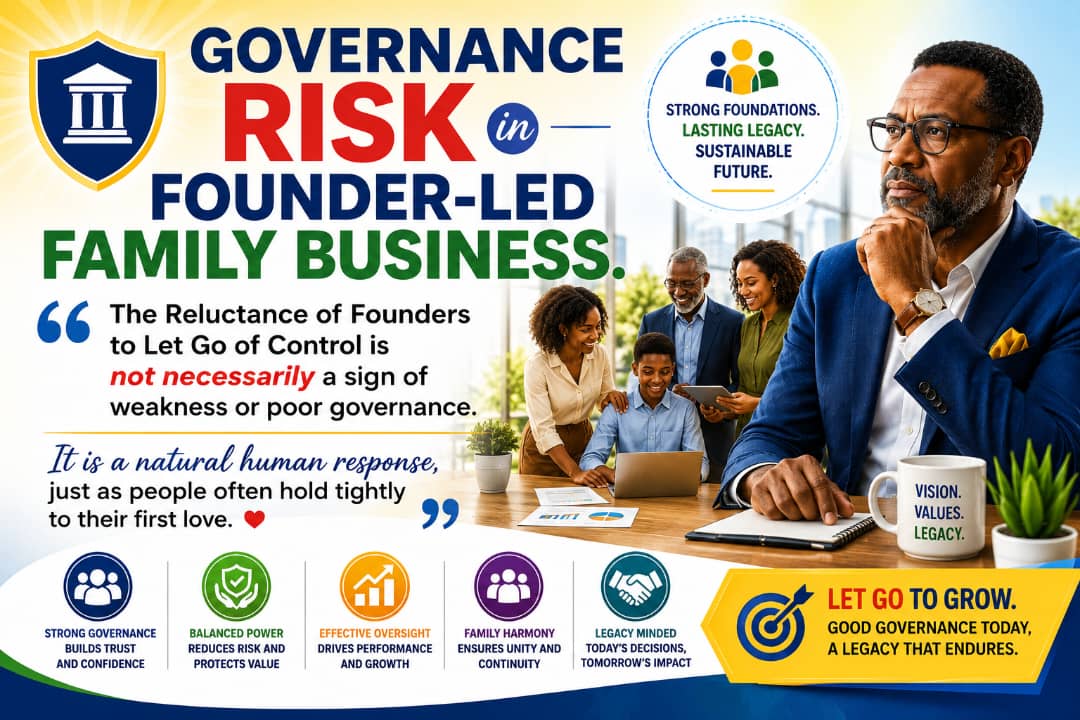

The Real Governance Challenge
The real governance challenge is not whether founders should remain involved.
The challenge is determining when, how, and to what extent authority, responsibility, and accountability should progressively transition from founder-centred leadership to institutional governance while preserving the founder’s vision, values, entrepreneurial spirit, and legacy.
Where Should the Journey Begin?
Designing an effective governance structure should begin with a comprehensive Governance Maturity, Strengths, and Gap Assessment.
Such an assessment should evaluate:
- Governance maturity
- Organisational strengths and weaknesses
- Risk exposure
- Governance culture
- Leadership capability
- Succession readiness
- Organisational preparedness for the next stage of growth
Particular attention should be given to:
- The interaction between the family, shareholders, the Board, and executive management
- Family Constitution and Family Governance Framework
- Shareholders’ Agreements and ownership arrangements
- Family Council structure, effectiveness, and decision-making processes
- Roles of family and non-family executives
- The founder’s willingness and readiness to delegate authority
- Capability and preparedness of influential family members
- Leadership readiness of the next generation
- Succession risks and governance gaps
The assessment should clearly identify governance strengths, weaknesses, improvement opportunities, key risks, and the organisation’s readiness to progress to its desired level of governance maturity.
Based on the findings, practical SMART (Specific, Measurable, Achievable, Relevant, and Time-bound) recommendations should be developed to guide the organisation through its next phase of governance evolution.
Succession Should Be Viewed Across Three Dimensions
An effective succession strategy should address three interconnected dimensions:
- Ownership Succession
- Executive Leadership Succession
- Family Governance Succession
Together, these dimensions help preserve both the family’s legacy and the long-term sustainability of the business.
Why This Matters
For consultants, investors, lenders, Board members, regulators, employees, and assurance providers working with founder-led family businesses—particularly in sectors such as real estate, manufacturing, construction, agriculture, and financial services—understanding these governance dynamics is essential.
It enables stakeholders to provide practical advice, set realistic expectations, strengthen governance systems, and support founders as they transition from entrepreneurial leadership to enduring institutional governance.
Final Thought
The long-term sustainability of every founder-led family business depends not on the founder doing everything personally, but on building robust governance systems, effective organisational structures, competent leadership teams, and well-designed succession frameworks that enable the business to thrive across generations.
A founder’s greatest legacy is not merely the business they build—it is the institution they leave behind.
Good governance does not diminish the founder’s influence. Rather, it protects the founder’s vision, preserves the entrepreneurial spirit that created the business, strengthens stakeholder confidence, and provides assurance that the organisation will continue to prosper long after the founder is gone.
What are your thoughts?
Have you seen founders successfully transition from founder-centred leadership to institutional governance,
or
have you experienced the challenges firsthand?
Read my other articles at https://sallyogwookeyumahi.com/
GovernanceRisk #CorporateGovernance #FamilyBusiness #FounderLedBusiness #BoardGovernance #RiskManagement #SuccessionPlanning #Leadership #InstitutionBuilding
