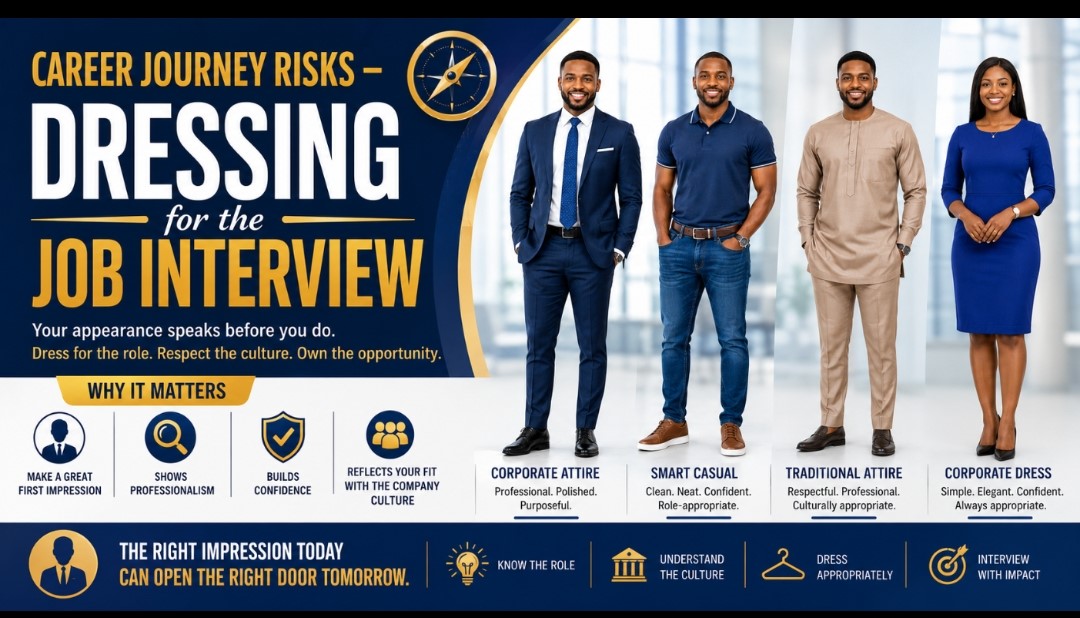

Every detail contributes to creating a professional image.
Candidates should avoid dressing either too casually or excessively formally. The objective is not to impress with expensive clothing but to demonstrate professionalism while fitting naturally into the organization’s culture.
Understand Regional Differences
Professional dressing is not identical across every organization or region.
For example, in many parts of Northern Nigeria, professionally tailored traditional attire is widely accepted within government institutions and corporate organizations. Men may wear well-tailored kaftans, while women may wear elegant traditional outfits suitable for professional settings. Babbanriga on week days except Friday may appear excessive dressing.
By contrast, many organizations in Southern Nigeria, particularly in banking, consulting, telecommunications, financial services, oil and gas, Western-style corporate business attire during interviews is expected, even if the organisation dresses down on the interview date. Candidates should therefore avoid making assumptions. What is considered appropriate in one region, industry, or organization may appear unsuitable in another.
Common Sense Matters
Professional dressing should always reflect the expectations of both the industry and the specific role. For example, the dress code expected of a Sales and Marketing Executive in a pharmaceutical company may differ significantly from that of someone applying for a similar role within the entertainment industry.
Likewise, hairstyles, makeup, jewelry, eyelashes, brightly coloured clothing, or bold fashion accessories that may be perfectly acceptable in the entertainment, beauty, fashion or creative industries may not project the desired professional image in more conservative corporate environments.
A candidate interviewing for a legal position who appears without the expected formal business attire—a suit, formal black shirt, tie and polished shoes—may immediately create the impression of poor professional judgment.
Similarly, a construction site engineer appearing in a three-piece corporate suit rather than practical site-appropriate attire may also appear disconnected from the realities of the role. Your professional appearance should always communicate that you understand the expectations of the position and the environment in which you will work.
Do Your Research Well and Ahead of Time
Rather than relying on assumptions, candidates should research the organization’s dress code, industry expectations, and workplace culture before attending an interview.
Useful sources of information include:
- The company’s website
- Corporate social media pages
- Employee LinkedIn profiles
- Company photographs and publications
- Professional contacts within the organization
A few minutes of research can prevent an avoidable mistake and significantly improve your first impression.
Don’t Overlook Virtual Interviews
Virtual interviews require the same level of professionalism as physical interviews.
Dress professionally from head to toe, not just the portion visible on camera. Unexpected situations may require you to stand up during the interview.
Also ensure that you:
- Choose a quiet environment.
- Use good lighting.
- Position your camera at eye level.
- Maintain good posture.
- Test your internet connection, microphone, and camera beforehand.
- Use a clean and uncluttered background.
- Minimise distractions and interruptions.
- Your appearance, body language, environment, and technical preparedness all contribute to the impression you create.
Final Thoughts
Your appearance communicates long before you speak your first word.
Dressing appropriately demonstrates
- professionalism,
- confidence,
- attention to detail,
- respect for the opportunity, and
- appreciation for the organization’s culture.
- While your knowledge,
- competence,
- experience,
- achievements, and character will ultimately determine whether you receive the job offer, appropriate dressing helps create the positive first impression that allows those qualities to be recognised and appreciated.
A great interview begins long before the first question is asked, therefore,
- Dress for the role you aspire to occupy.
- Respect the organization’s culture.
- Let your professionalism speak before you do.
What do you think?
Keep your reactions, comments and questions coming.
Read more at https://sallyogwookeyumahi.com/
.
